

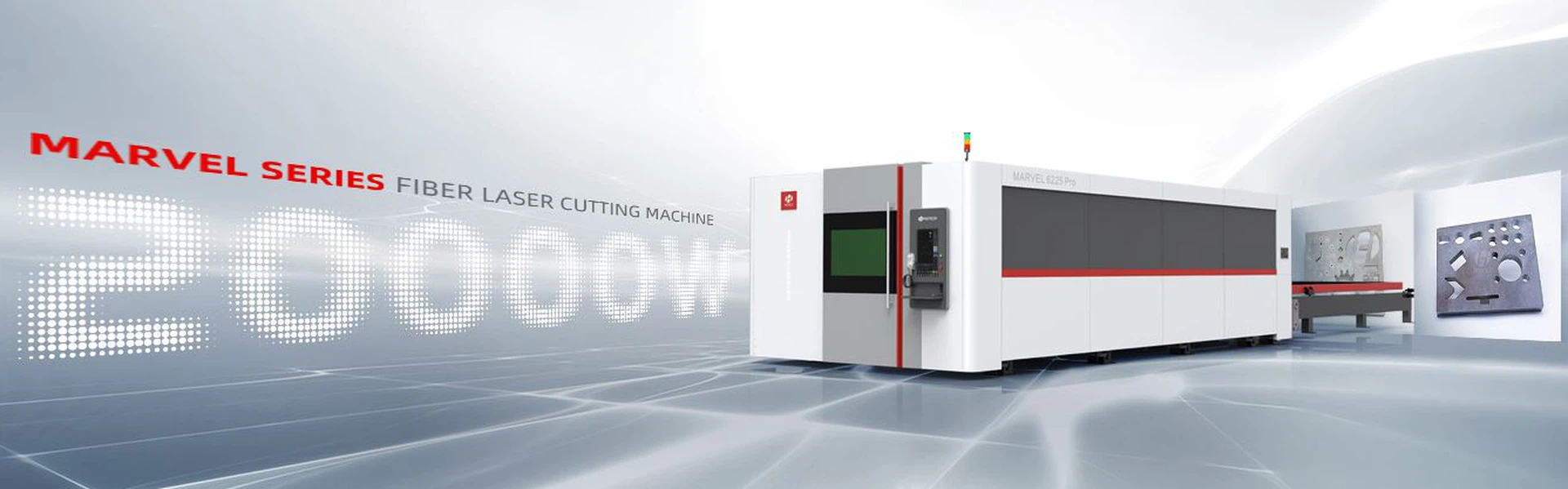
Laser welding machines represent a transformative advancement in industrial manufacturing, utilizing high-intensity laser beams to join materials with exceptional precision and efficiency. Unlike traditional welding methods, laser welding operates through a non-contact process where a focused laser beam generates intense heat at the target point, causing materials to melt and fuse without damaging the surrounding areas. This technology is renowned for its ability to produce clean, strong welds with minimal distortion, making it indispensable across sectors such as automotive, aerospace, electronics, and medical device manufacturing.

How Laser Welding Works?
The core principle of laser welding involves directing a concentrated laser beam onto the workpiece surface. The laser energy is absorbed by the material, creating a molten pool that solidifies into a durable weld joint. Two primary techniques are employed:
Conduction Welding: Ideal for shallow welds, where heat spreads through thermal conduction without deep penetration.
Keyhole Welding: Uses higher power density to vaporize material, forming a deep, narrow weld pool for thick components
Key components include the laser source (e.g., fiber, CO₂, or diode lasers), beam delivery systems (mirrors or fiber optics), and computerized controls for precision parameter adjustments.

Advantages Over Traditional Welding
Laser welding machines offer significant benefits:
Precision and Minimal Heat Affect: The focused beam limits the heat-affected zone (HAZ) to <0.1mm, reducing thermal distortion and preserving material integrity
Speed and Efficiency: Operating at speeds up to 30m/min, laser welding is 10x faster than conventional methods like TIG or MIG welding, boosting productivity
Versatility: Capable of welding metals (e.g., steel, aluminum, titanium), plastics, and even dissimilar materials critical for aerospace and electronics
Automation Compatibility: Integrates seamlessly with robotics and AI-driven systems, enabling unmanned operations and real-time quality monitoring
Environmental Benefits: Eliminates consumables like gases or electrodes and reduces energy consumption by 40–60% compared to arc welding

Industrial Applications
Automotive: Widely used for body-in-white welding, battery tab welding in EVs, and lightweight component assembly. Laser welding reduces vehicle weight by 15% and enhances structural strength
Aerospace: Ensures high-integrity welds for turbine blades, fuel systems, and spacecraft components, meeting stringent safety standards
Electronics: Enables micro-welding of circuit boards, sensors, and semiconductors with accuracy up to 0.3mm, avoiding damage to delicate parts
Medical Devices: Produces sterile, precise welds for surgical instruments and implants, complying with biocompatibility requirements
Jewelry and Artifact Restoration: Allows intricate repairs without thermal damage to precious materials
Technological Innovations and Trends
Recent advancements are reshaping the industry:
High-Power Fiber Lasers: Modern systems deliver up to 100kW power, penetrating 20mm-thick steel plates while maintaining beam quality
AI and IoT Integration: AI algorithms optimize welding parameters in real-time, reducing defects by 30%, while IoT-enabled devices facilitate predictive maintenance
Additive Manufacturing: Laser welding combined with 3D printing allows rapid prototyping and production of complex geometries
Green Technology: New machines achieve >85% electro-optical efficiency, minimizing carbon emissions
Market Outlook
The global laser welding machine market is projected to grow from 2.7billion(2024)to4.5 billion by 2034, driven by demand from the automotive and electronics sectors.
Asia-Pacific leads adoption, accounting for 40% of market share, with China as a key manufacturing hub . Challenges include high initial costs (50,000–2 million per system) and the need for skilled operators, but declining prices and modular designs are expanding accessibility .
Conclusion
Laser welding machines are pivotal to modern manufacturing, offering unmatched precision, efficiency, and versatility. As technology evolves with AI, automation, and sustainability features, their application will expand into emerging fields like quantum computing and biomedical engineering. For industries seeking to enhance productivity and reduce environmental impact, investing in laser welding technology is not just strategic-it is essential for future competitiveness.


