

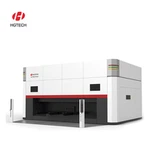
Economic Laser Marking Machine

Economic Laser Marking Machine
Is a non-contact printing method that marks or engraves high-quality 1D and 2D bar barcodes, multiple lines of text, batch numbers, lot codes, logos, and more on products to provide product information, identification, and traceability data.
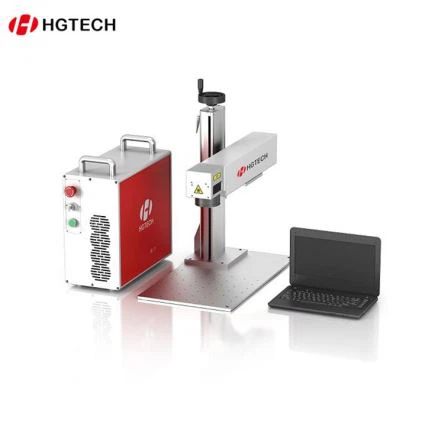
Laser marking machines offer advantages such as, excellent mark quality, permanence, and fewer consumables, over other coding technologies. The HGTECH laser marking machines includes CO2 laser markers, fiber laser markers and UV laser markers in different power outputs to address a range of substrates and applications. In addition, HGTECH offers a complete portfolio of laser accessories including lenses and beam turning units to simplify integration into production lines and maximize the laser’s performance.



Why Choose us ?
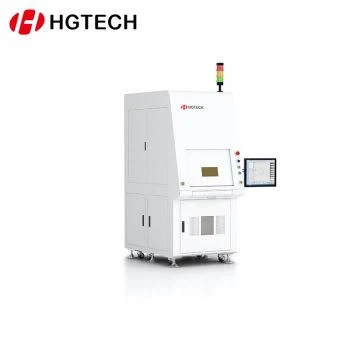
HGTECH can offer you the best Laser Marking Machine
HGTECH is a reliable laser marking machine supplier.
Our laser markers go to more than 50 countries. Most of our business is overseas, so we know how to deliver service to high international standards.

We can offer a wider range of laser markers, and we are sure you will find a price and configuration that suits your marking needs.
We design our laser marking systems for all types of use, whether for standalone marking or integration into the production line.
CO2 vs Fiber vs UV Lasers
Laser cutting and engraving have changed the way materials are now cut and engraved. These laser machines are quickly becoming popular due to the degree of accuracy, speed, and flexibility offered by the laser engraver. The three most commonly used types of laser machines are CO2, Fiber, and UV lasers.
CO2 lasers are the most commonly used type of laser machine. The laser works by producing a 10.6 micron beam that will heat the material until it vaporizes.They are able to cut objects as small as 0.1 mm. CO2 machines are quite versatile due to their wide range of cuttable materials, such as non-metals.
CO2 lasers are becoming more commonly used in industries that deal with woodworking, packaging, textiles, and automotives. While the CO2 machine is the slowest of the three types and requires regular maintenance, that fact is easily offset by the versatility available at little cost. Another reason CO2 machines are so popular is due to their varying workspaces and relative affordability. A CO2 machine can fit into any workspace.
First introduced in the 1990s, Fiber lasers use a solid-state fiber laser source to produce a laser beam. The wavelength of fiber lasers are ten times smaller than that of CO2 machines, making these machines capable of engraving materials made of metal. It can also engrave on plastics quite well, making it usable with everyday objects. Fiber lasers are also able to create details down to a micron.
The amount of precision available in a fiber laser makes it highly sought after by those in the mechanical industries, such as automotive, aerospace, electronics, and metalworking. Fiber lasers are more expensive than CO2 machines, however they have a much longer life expectancy and require far less maintenance.
UV laser machines are quite similar to fiber laser machines. They are built using an ultra-violet solid-state drive. The wavelengths a UV produces is a third that of a fiber engraver, making it able to produce even finer details.
These capabilities make the UV sought out by individuals in electronics, aerospace, and in the medical field. Since UV machines are newer, they tend to be the most expensive out of the three machines. Additionally, due to its relatively new use, UV lasers are offered in only three potential wattages: 3 Watts, 5 Watts, and 10 Watts.
Features of laser marking machine

It is suitable for metals (need to be equipped with corresponding lasers), plastics, glass, ceramics, wood, leather, etc. Material; marking is clear, permanent, beautiful and effective anti-counterfeiting; it has the characteristics of fast marking speed, low operating cost, and no pollution.
The laser marking machine uses a laser beam to make permanent marks on the surface of various materials. Used in electronic components, integrated circuits (IC), electrical appliances, mobile communications, hardware products, tool accessories, precision equipment, glasses and watches, jewelry, auto parts, plastic buttons, building materials, PVC pipes.
advantages of laser marking
Laser marking, the process of using lasers to engrave or mark surfaces, has gained widespread popularity due to its numerous advantages over traditional marking methods. This technique is employed for various applications, including adding human-readable information for traceability, incorporating 2D codes to provide additional data on products, or simply marking logos. Laser marking stands out for its efficiency, versatility, and durability, making it the technology of choice where quality is paramount. The recent reduction in laser costs, driven by HGTECH, has made laser marking systems highly affordable.
In conclusion, laser marking is a highly efficient, precise, and versatile marking technique that offers several advantages over traditional marking methods. Its durability, accuracy, and eco-friendliness make it an attractive option for a variety of industries.

applications of laser marking machine

The laser marking machine has wide applications and is primarily employed for marking logo, words, brand, date, series number, batch number, sign, drawing, photo, QR code, etc. on the surface of metal & non-metal material. The range of metals include stainless steel, alloy, metal plate, aluminum, silver, gold, etc. and the non-metals include plastic: engineering plastic and hard plastic, etc. It is also used in electronic equipment, such as- integrated circuits, mobile communications, precision instruments, glass watches and clocks, computer keyboards.
Different Types Of Laser Marking Machines And Their Applications
There are several types of laser marking machines, each utilizing different laser sources and mechanisms to achieve specific marking effects. To obtain good marking results, you need to choose the correct laser marking machine according to the type of material. The following are different types of laser marking machines and their application scenarios.
Metal Marking: A fiber laser marking machine is highly effective for marking metals such as stainless steel, aluminum, copper, and alloys. They are widely used in industries like automotive, aerospace, and electronics for part identification and traceability.
Plastic Marking: Fiber laser marking machine can also mark certain types of plastics, providing a permanent and high-contrast mark. This is useful in the production of electronic components and consumer goods.
Organic Materials: The CO2 laser marking machine is suitable for marking organic materials like wood, leather, glass, and certain types of plastics. They are commonly used in the packaging, arts and crafts, and promotional products industries.
Paper and Cardboard: CO2 lasers are used for marking expiration dates, serial numbers, or other information on paper and cardboard packaging.
High-Contrast Marking on Plastics: UV lasers are effective for marking plastics, especially in applications where a high-contrast mark is required. This is often used in the medical device and electronics industries.
Semiconductor Marking: UV lasers are used for marking semiconductor materials, providing precise and high-resolution marks without damaging the sensitive components.
Sensitive Materials: Green lasers are suitable for marking sensitive materials such as plastics and certain types of ceramics. They are used in applications where heat generation needs to be minimized.
High-Speed Marking: Green lasers are often chosen for high-speed marking applications due to their shorter wavelength.
Deep Engraving on Metals: YAG lasers are capable of deep engraving on metals, making them suitable for applications where a more pronounced mark is required. This is often used in the tool and die industry.
Ceramic Marking: YAG lasers can mark ceramics effectively, making them useful in industries like electronics and medical devices.
Plastic and Metal Marking: Diode-pumped lasers are versatile and can be used for marking both plastics and metals. They are chosen for applications where a compact and efficient solution is required.
High-Speed Marking: Q-switched lasers are capable of producing short bursts of energy, making them suitable for high-speed marking applications. This is useful in industries where production efficiency is a key consideration.
faq
Q: How to choose a Laser Marking Machine?
Marking Speed and Precision.
Laser Beam Power.
Ease of Use and Maintenance.
Beam Quality and Electrical Connection.
Q: What is the difference between 20W and 30W laser marking machine?
Q: What does a laser marking machine do?
Q: How much does a laser marking system cost?
Q: What is the speed of laser marking machine?
Q: What is the depth of laser marking machine?
Q: What materials are safe for laser engraving?
Q: Which language versions your laser marking machine software support?
Q: 20w or 30w or 50W fiber laser marking machine, which one would better?
Q: Can you add a protection cover for laser marking machine?