

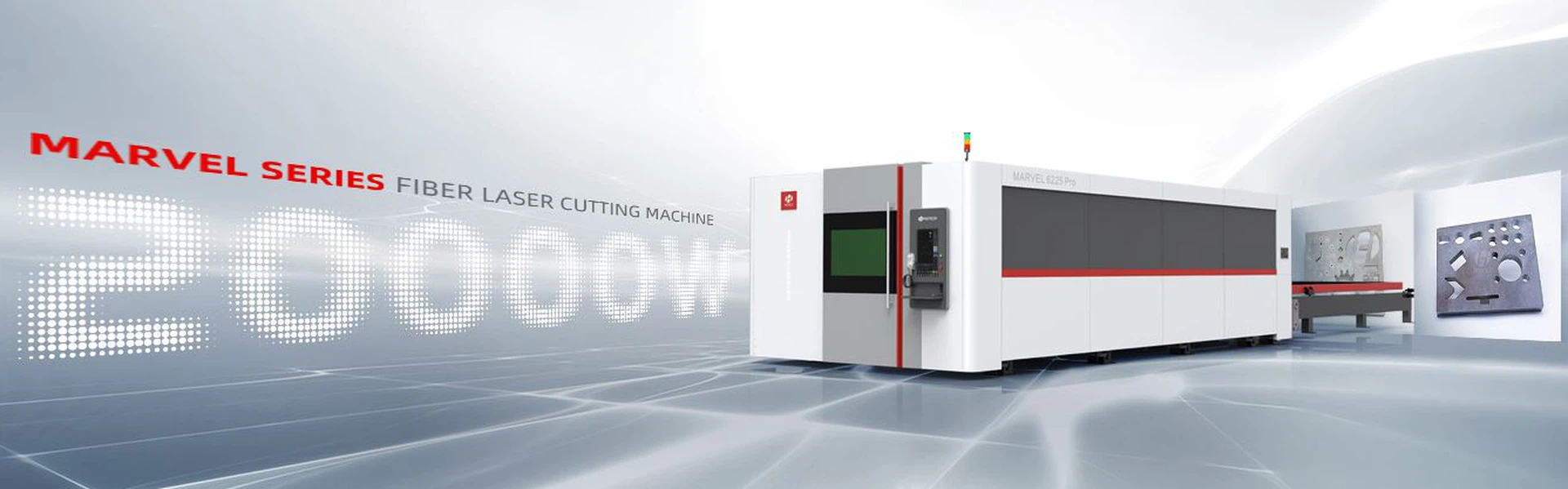
1.What is a Fiber Laser Cutting Machine?
HGTECH fiber laser cutting machine uses a high-intensity laser beam generated from fiber optics to melt or vaporize materials. The core component is a fiber laser source (e.g., IPG or Raycus brands), which amplifies light through doped optical fibers. This concentrated beam, guided by CNC systems, achieves micron-level precision on metals like steel, aluminum, and copper.

Key Components:
Laser Generator: Converts electricity into coherent light (1kW–12kW power range).
Cutting Head: Adjusts focus dynamically for varying material thicknesses (0.5–25mm).
CNC Controller: Translates CAD designs into cutting paths with ±0.05mm accuracy.
2.Why Choose Fiber Lasers Over Traditional Methods?
What makes fiber lasers superior to plasma or CO₂ lasers?
Speed & Efficiency:
Cuts 3x faster than plasma, with speeds up to 120m/min.
Consumes 40% less energy due to 30% wall-plug efficiency

Precision:
Achieves 0.02mm repeatability for intricate designs (e.g., aerospace components)
Minimal heat-affected zone (HAZ) prevents material warping
Versatility:
Handles round, square, and irregular tubes (up to 350mm diameter)
Compatible with reflective metals like copper and brass, which challenge CO₂ lasers.
3: Applications Across Industries
| Industry | Use Cases | Key Benefit |
|---|---|---|
| Automotive | Chassis, exhaust systems, EV battery trays | High-speed mass production |
| Aerospace | Titanium alloy ducts, engine mounts | Zero post-processing requirements |
| Construction | Steel beams, HVAC components | 30% material waste reduction |
| Medical | Surgical instrument tubing | Sterile, burr-free edges |
4.How to ensure fiber laser cutting machine for a long-term performance?
Daily Checks:
Clean optics and rails to prevent dust buildup.
Monitor gas purity (e.g., nitrogen for oxidation-free cuts).
Software Updates:
Upgrade nesting algorithms to maximize material utilization.
Preventive Measures:
Replace consumables (nozzles, lenses) every 500 operating hours.
Use AI-driven predictive maintenance tools to avoid downtime.
5.FAQ
Q1: Can it cut non-metallic materials like wood or acrylic?
No-fiber lasers are optimized for metals. For wood or plastics, CO₂ lasers are preferable.
Q2: What safety certifications are required?
Look for CE, ISO, and FDA compliance to ensure workplace safety and global market access.
Q3: How much does a fiber laser machine cost?
Prices range from 30,000for1kWmodels∗∗to∗∗75,000+ for industrial 12kW systems.
Q4: What's the ROI timeline?
Most factories recoup costs in 12–18 months via reduced labor and material savings.


