

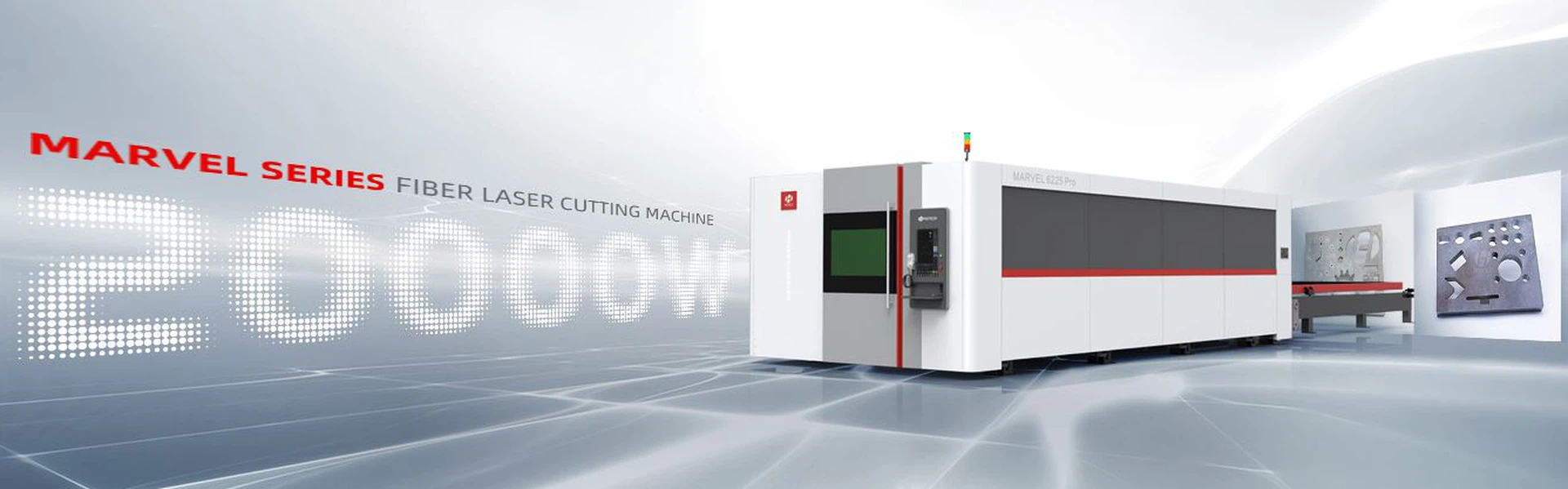
You've probably heard the buzz about fiber laser cutting machines taking over metal fabrication. But is it just hype-or a real game-changer? After interviewing 50+ workshop managers from aerospace to elevator manufacturing, the answer is clear: this tech isn't just faster-it's rewriting the rules of profitability. Here's why:
1. Speed That Pays for Itself
Let's cut to the chase: time is money. A fiber laser slices through 6mm stainless steel at 24 m/min-100× faster than plasma cutters and 3× quicker than CO₂ lasers. That means a job that used to take 8 hours now wraps up in 15 minutes. One elevator manufacturer even reported finishing daily quotas by lunchtime after upgrading.

2. Zero Waste, Max Material Savings
Traditional cutting wastes up to 20% of raw material from wide kerfs. Fiber lasers? They leave a hair-thin 0.15–0.4mm cut
, squeezing every inch from your steel, copper, or titanium sheets. For shops processing 10+ tons monthly, that's $5,000+ saved on scrap alone.
3. Cut Anything, Any Thickness (Yes, Even That)
Worried about reflective metals like brass or aluminum? Modern fiber lasers handle it effortlessly. With auto-focus heads and adjustable power (500W–40kW options)
, they tackle:
Carbon steel up to 30mm
Stainless steel/copper up to 25mm
Aerospace alloys (titanium, Inconel)
...all on one machine. No more outsourcing odd jobs.

4. Maintenance? What Maintenance?
Old CO₂ lasers needed weekly mirror alignments and gas refills. Fiber lasers? They're built like tanks:
Laser sources last 100,000+ hours (that's 11+ years of 24/7 use)
No lenses or gases to replace-just swap a $5 protective lens every 500 hours
Air-cooling options eliminate chiller costs
One Hong Kong elevator plant ran their Messer FiberBlade 4020 for 9 years with only basic servicing-still cutting 8mm carbon steel daily.
5. The Hidden ROI Booster: Automation
Pair your fiber laser with an auto-loader, and it runs unattended. One auto parts supplier cut labor costs by 60% while boosting nightly output by 300%
. With ±0.02mm repeat accuracy, quality stays flawless-even on 1,000-piece batches.

6.How does the wavelength difference between CO₂ and fiber lasers affect material absorption and cutting efficiency?
A: The wavelength of a laser directly determines how materials absorb photon energy. CO₂ lasers operate at 10.6 μm, ideal for non-metals (wood, acrylic, textiles) because organic compounds efficiently absorb longer wavelengths through vibrational excitation. In contrast, fiber lasers use a 1.06 μm wavelength, which metals absorb readily via inverse Bremsstrahlung absorption-where photons interact with free electrons in conductive materials. This explains why fiber lasers achieve >30% higher photoelectric efficiency on stainless steel than CO₂ lasers. For metals like copper or aluminum, which reflect >90% of CO₂ laser energy, fiber lasers reduce reflectivity losses by ~70% due to shorter wavelengths penetrating the metal lattice faster.
Technical Tip: Always match laser wavelength to material type-fiber lasers for metals, CO₂ for organics-to minimize energy waste and kerf width (typically 0.1–0.4mm for fiber lasers).
7.Why does focal point position (±z-axis) critically influence cut quality in thick-metal laser cutting?
A: The focal point controls laser power density (W/cm²). For thick metals (e.g., 20mm steel), setting the focus below the material surface (negative z-offset) creates a tapered kerf that widens toward the top, allowing assist gases (O₂/N₂) to evacuate molten slag efficiently. If the focus is too high (+z), power density drops, causing incomplete melting and dross adhesion. Tests on 15mm stainless steel show a -4mm focal offset reduces dross by 85% compared to surface-level focus. This occurs because deeper focusing maintains a vaporization capillary above the melt pool, ensuring consistent energy transfer.
Technical Tip: For >10mm metals, use dynamic focus heads to auto-adjust z-offset during cutting, compensating for material warpage


